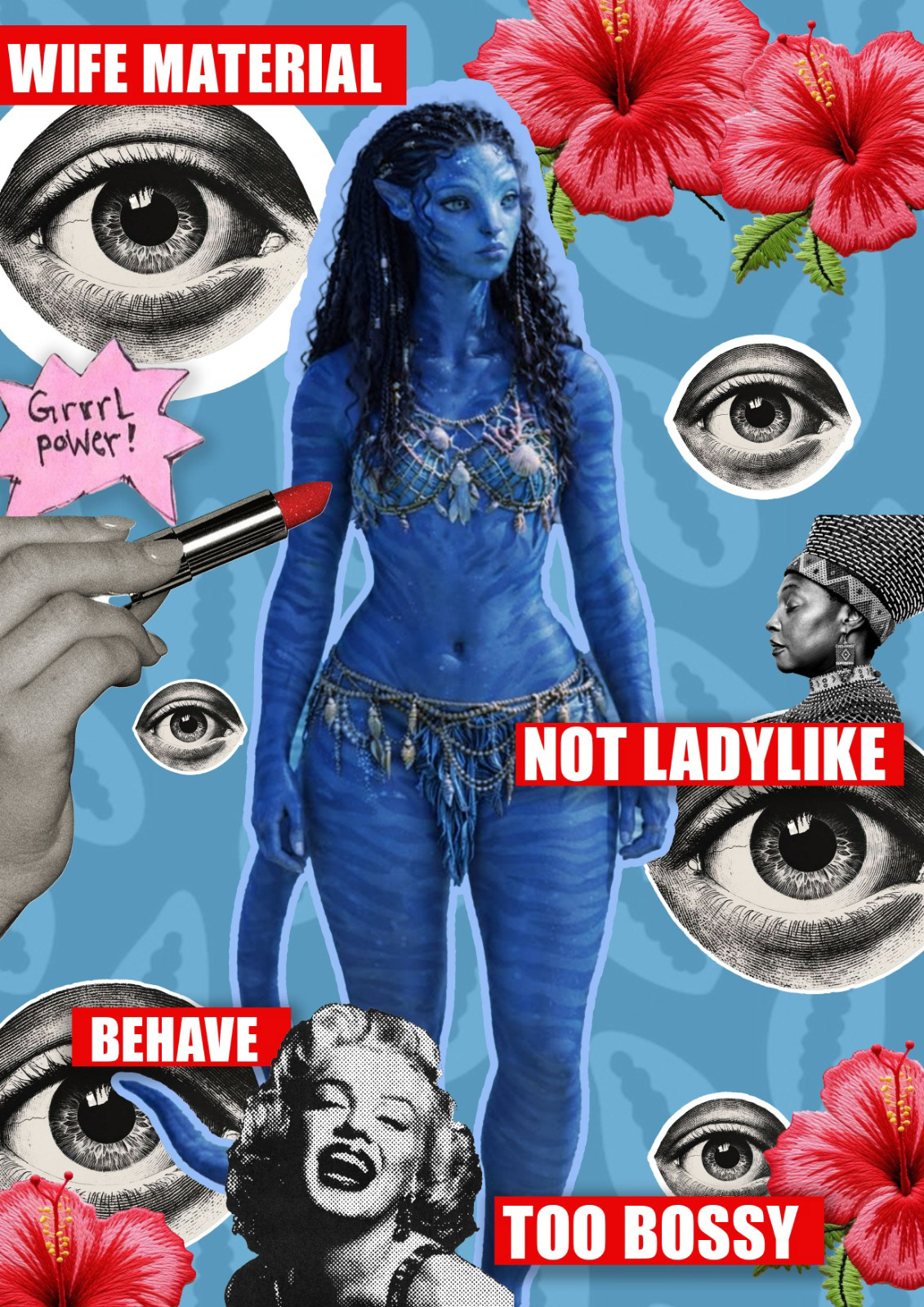
Karabo Thobejane, Wife Material. 18 x 24 inches. Digital media. Central University of Technology, Free State, South Africa, 2026.
Project Statement
This project explores the theme of “Bodies of Colour”, focusing on how identity is shaped, labeled, and interpreted through societal expectations. The work visually translates how individuals, particularly women, are often defined through external perception rather than their own lived reality.
This project explores the theme of “Bodies of Colour”, focusing on how identity is shaped, labeled, and interpreted through societal expectations. The work visually translates how individuals, particularly women, are often defined through external perception rather than their own lived reality.
The concept is grounded in societal labeling and constructed identities, represented through layered and fragmented visual composition. Figures are placed in a space of distortion and tension, reflecting how identity is often reduced into categories based on gender, appearance, and cultural expectation rather than individuality. Within the composition, chaos is used intentionally as a reflection of the world’s instability, particularly in relation to power, control, and discrimination. The overlapping elements, tension in placement, and visual noise represent how external forces compete to define and control identity. Rather than meaning disorder alone, the chaos becomes a structured metaphor for lived experience within a divided and unequal society.
This chaos also reflects gendered power dynamics, where conflicting expectations between genders influence how women are perceived and treated. The work critiques how women are often positioned within limiting narratives shaped by stereotypes, historical assumptions, and the ongoing presence of the male gaze. These ideas are represented visually through intrusive, distorted male figures that interrupt the space, symbolising how women’s identities are frequently spoken over or interpreted through external voices. A strong layer of geographical influence is communicated through symbolic contrast, where Western and African beauty standards are visually placed within the same conceptual environment. This comparison highlights how ideals of beauty differ across locations and cultures, while also exposing how these ideals coexist and collide within global visual culture. The dual presence of these standards reinforces how identity is influenced by geography, yet continuously reshaped through external perception.
The inclusion of symbolic Western male figures shown through voyeuristic gestures such as peeking and speaking through a microphone, represents the projection of dominant narratives onto women. The microphone gesture specifically symbolises the spread of opinions, stereotypes, and historically rooted commentary about women that continues to influence perception in both past and present contexts. At the centre of the composition, the silhouette female figure with a crown and shifting gaze represents resilience within this chaotic environment. The crown symbolises dignity, strength, and survival despite external pressure. Her side-to-side gaze reflects awareness and vigilance, suggesting the constant need to navigate social judgment, surveillance, and expectation while maintaining identity and presence.
Self Reflection
Self Reflection
The collaborative process behind this project further strengthened its meaning. Working as a group, even while physically separated, highlighted the importance of communication, active listening, and shared creative direction. The development of ideas was efficient due to a shared understanding of the concept, and the process reinforced the importance of contributing confidently while ensuring all voices are acknowledged and respected.
Conclusion
Overall, this project presents a visually symbolic and conceptually layered exploration of identity, perception, and power. Through fragmented composition, cultural contrast, and figurative symbolism, it reflects how women, particularly women of colour navigate, resist, and persist within complex and often conflicting social systems.
Video of the process. Courtesy of the designer Karabo Thobejane, Wife material, CUT 2026