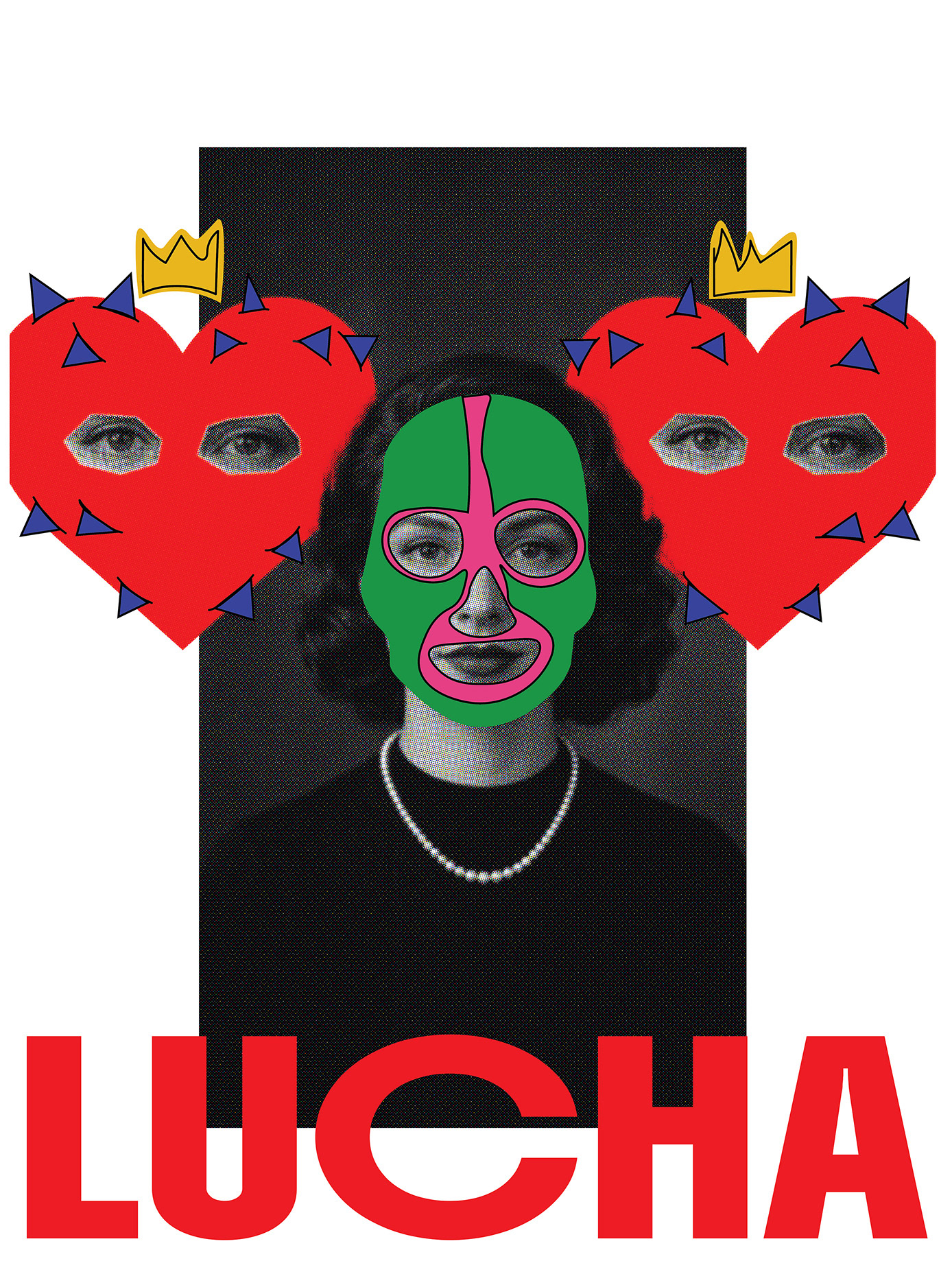
Valentina Brana, La Lucha Final. Mixed media, 18 x 24 inches. Florida International University, USA, 2026.
Project Statement
In deciding to do my project on the topic of Ritual, Texture, and Memory, I chose to keep my work connected to my own culture. Growing up in Mexico, I was influenced by many things, because Mexican culture is very extensive (from food, to traditional dances, to ancestors, to gods, to folklore, to magical towns, and more). However, at the very beginning I was especially intrigued by exploring ritual, because even though the first thing that came to mind was Aztec rituals, where people were sacrificed for the good of the community, I also started thinking about how many of the things we practice nowadays can also be considered rituals. By definition, a ritual is something done in accordance with social custom or normal protocol, and from that idea.
In deciding to do my project on the topic of Ritual, Texture, and Memory, I chose to keep my work connected to my own culture. Growing up in Mexico, I was influenced by many things, because Mexican culture is very extensive (from food, to traditional dances, to ancestors, to gods, to folklore, to magical towns, and more). However, at the very beginning I was especially intrigued by exploring ritual, because even though the first thing that came to mind was Aztec rituals, where people were sacrificed for the good of the community, I also started thinking about how many of the things we practice nowadays can also be considered rituals. By definition, a ritual is something done in accordance with social custom or normal protocol, and from that idea.
I began to explore the concept of Lucha libre. Matches in Lucha libre follow a very consistent format: the entrance, the introduction of wrestlers, the clear division between heroes and villains, the dramatic conflict, and the resolution. This repetition is key to ritual, as it creates familiarity and expectation, like a script everyone knows but still wants to experience again. Connecting this to memory and ritual, I also thought about how a lucha mask is worn with pride when entering the ring.
Hence, I depicted a woman wearing a mask inspired by lucha libre to reference the ritual of performance and identity. The mask symbolizes both protection and transformation, allowing her to take on a powerful, constructed persona. By placing this traditionally masculine-coded symbol onto a female figure, I challenge gender roles and reclaim strength within a feminine context. This connects to ritual, memory, and texture through the cultural weight of the mask, its material presence, and its ties to collective experience.
Reflection
"I really enjoyed having the opportunity to learn from and collaborate with students from Africa and India. Even though I didn’t directly use their cultures in my work, I was able to engage with them, ask questions, and learn about their own perspectives on ritual, texture, and memory. It was also exciting to compare my work with others from different countries. What stood out most was how we could all come together and relate under the shared belief that women deserve so much more, and that many of us have experienced forms of gender inequality in our own lives. Even though we come from different parts of the world, that sense of connection felt very familiar."
Reflection
"I really enjoyed having the opportunity to learn from and collaborate with students from Africa and India. Even though I didn’t directly use their cultures in my work, I was able to engage with them, ask questions, and learn about their own perspectives on ritual, texture, and memory. It was also exciting to compare my work with others from different countries. What stood out most was how we could all come together and relate under the shared belief that women deserve so much more, and that many of us have experienced forms of gender inequality in our own lives. Even though we come from different parts of the world, that sense of connection felt very familiar."