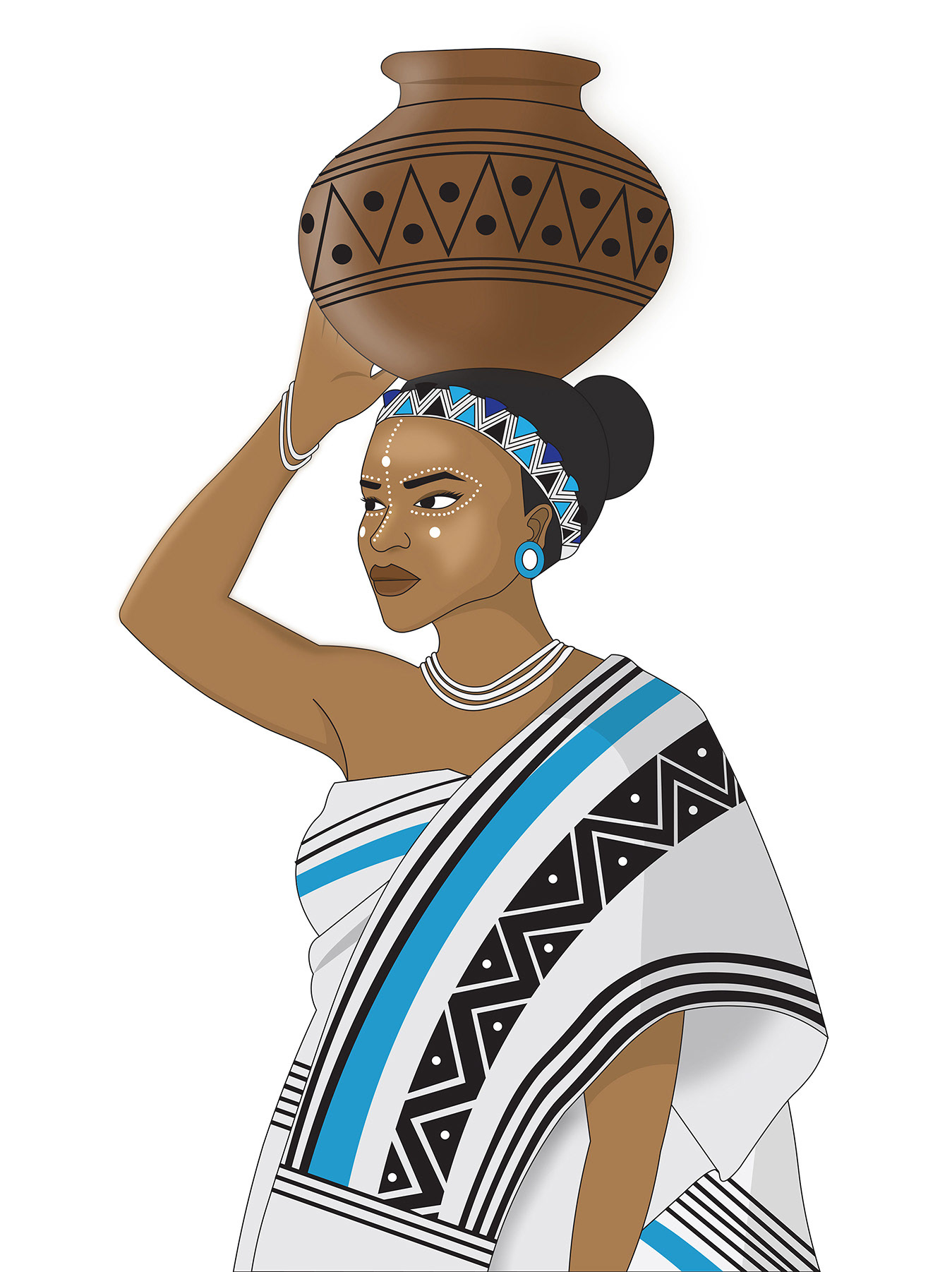
Ntlahla Mpahla, The Zulu woman. Digital drawing. 18 x 24 inches. Florida International University, USA, 2026
Project Statement
Who Women Are is a collaborative project that explores the identity, roles, and representations of women across different societies, highlighting both shared experiences and unique cultural expressions.
Through collaboration, we engaged in meaningful dialogue about how women are viewed within our respective communities examining themes such as strength, tradition, resilience, identity, and empowerment. Each contributor brought elements from their own cultural background, resulting in a body of work that reflects diversity while emphasizing unity. This exchange allowed us to learn from one another and challenge our assumptions, deepening our understanding of womanhood on a global scale.
The project also investigates how women carry and preserve cultural memory through rituals, daily practices, and symbolic expressions. By combining visual storytelling, pattern, and symbolism, we aimed to represent women not only as individuals but as powerful figures who shape and sustain societies.
Self Reflection
In my group, the importance of women commented on ritual, texture and memory
In my group, the importance of women commented on ritual, texture and memory
The central figure, a woman balancing a clay pot on her head immediately suggests strength, balance, and responsibility. In many South African cultures, women are traditionally seen as caretakers and carriers, both physically (water, food, resources) and symbolically (culture, family, heritage). The upright posture and calm expression reinforce dignity and resilience.
Texture
Although the artwork is digitally rendered, it strongly evokes tactile qualities. The clay pot suggests a rough, earthy texture associated with handmade objects, connecting to land and tradition.
Texture
Although the artwork is digitally rendered, it strongly evokes tactile qualities. The clay pot suggests a rough, earthy texture associated with handmade objects, connecting to land and tradition.
The clothing features bold geometric patterns, resembling textiles found in cultures such as the Zulu people and Ndebele people, where fabric and beadwork are rich in symbolic texture. The contrast between smooth skin tones and patterned fabric creates a layered visual experience, emphasizing both individuality and cultural identity.
Ritual
The act of carrying a pot on the head is not just functional—it reflects daily rituals passed down through generations. It symbolizes discipline, skill, and tradition. The face markings (white dots and lines) further suggest ceremonial or cultural practices, often linked to rites of passage, identity, or celebration. These elements together highlight how women are central to maintaining and performing cultural rituals.
The act of carrying a pot on the head is not just functional—it reflects daily rituals passed down through generations. It symbolizes discipline, skill, and tradition. The face markings (white dots and lines) further suggest ceremonial or cultural practices, often linked to rites of passage, identity, or celebration. These elements together highlight how women are central to maintaining and performing cultural rituals.
Memory
Memory is conveyed through the preservation of traditional attire, patterns, and practices. The artwork acts as a visual archive, capturing elements that might otherwise fade in modern contexts. The stylized patterns and adornments represent inherited knowledge what is remembered, taught, and continued. The woman becomes a living symbol of cultural memory, carrying history forward just as she carries the pot.
Memory is conveyed through the preservation of traditional attire, patterns, and practices. The artwork acts as a visual archive, capturing elements that might otherwise fade in modern contexts. The stylized patterns and adornments represent inherited knowledge what is remembered, taught, and continued. The woman becomes a living symbol of cultural memory, carrying history forward just as she carries the pot.
Colour and Symbolism
The use of blue, black, and white alongside earthy browns is significant. Earth tones connect to land and ancestry, while the bold blue accents may symbolize vitality, identity, or even a modern reinterpretation of tradition. The balance between neutral and vibrant colours mirrors the blend of past and present.
The use of blue, black, and white alongside earthy browns is significant. Earth tones connect to land and ancestry, while the bold blue accents may symbolize vitality, identity, or even a modern reinterpretation of tradition. The balance between neutral and vibrant colours mirrors the blend of past and present.