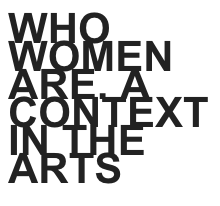
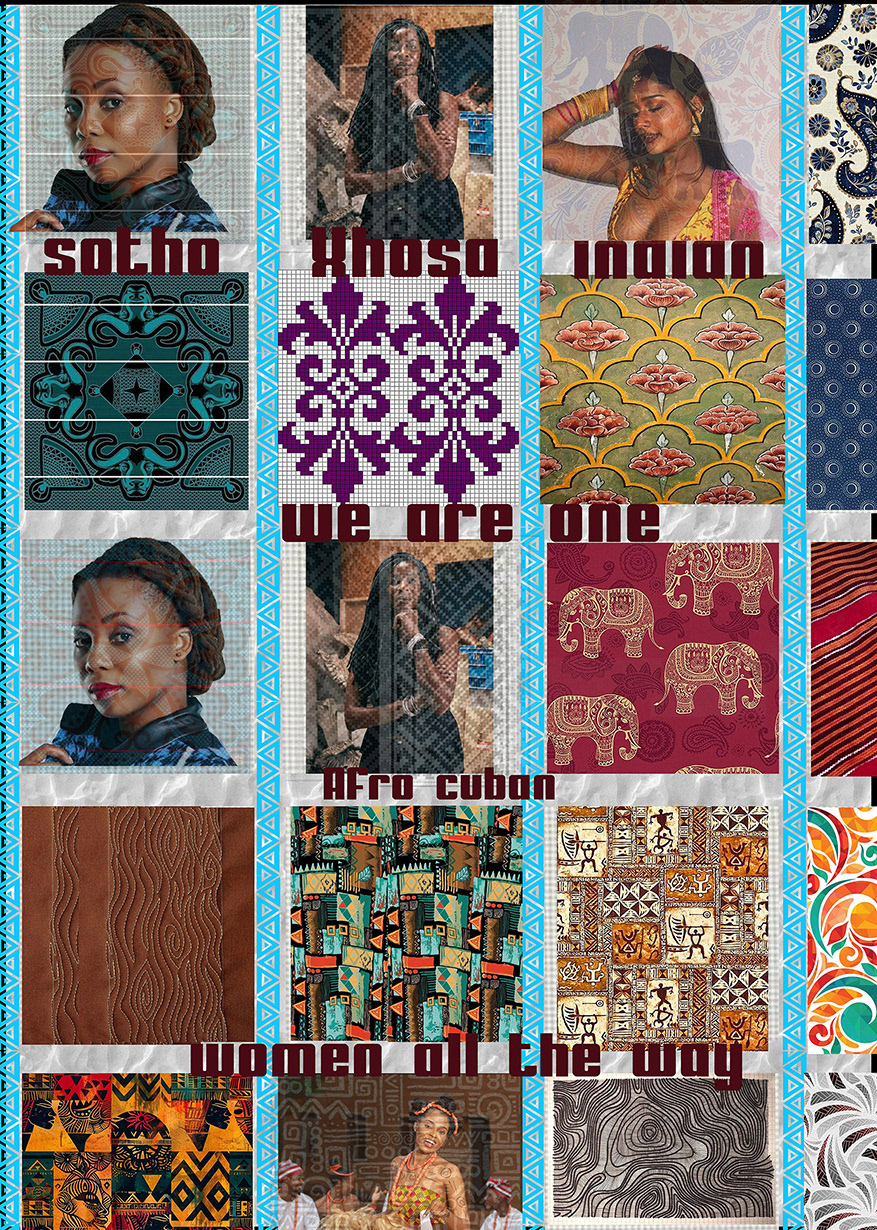
Awande Ngcobo. Feminine Quilt. Mixed media. 18 x 24 inches. Central University of Technology. Free State, South Africa, 2026
Project Statement
The group project focuses on the theme "Who Women Are" through a "material-driven, culturally based approach." The project was created in collaboration with other international universities. The key concept in our project was "material as message," whereby the selection of the media was not only functional but also symbolic. Due to its importance in history and culture as a form of storytelling, retention, and remembrance, we selected the traditional quilt as our key media in our project. Quilts are a powerful form of symbolism regarding identity and belonging because they have been used in different countries to document individual and social experiences. Quilts are also made in collaboration with other individuals and are passed down from generation to generation.
The group project focuses on the theme "Who Women Are" through a "material-driven, culturally based approach." The project was created in collaboration with other international universities. The key concept in our project was "material as message," whereby the selection of the media was not only functional but also symbolic. Due to its importance in history and culture as a form of storytelling, retention, and remembrance, we selected the traditional quilt as our key media in our project. Quilts are a powerful form of symbolism regarding identity and belonging because they have been used in different countries to document individual and social experiences. Quilts are also made in collaboration with other individuals and are passed down from generation to generation.
The main aim of the project is to represent women from different cultural backgrounds, such as Indian, Afro-Cuban, Sotho, and Xhosa. The use of various textures, patterns, and colours from each cultural identity will be used to represent each culture in its own part of the quilt. To add humanity to the project and focus on what makes each culture unique, women from different civilizations will be depicted or drawn and incorporated into the design. These components aim to represent various messages such as tradition, hardiness, femininity, and social responsibilities, in addition to external cultural markers such as clothing and design schemes.
In this way, the project also brings to life the idea of “unity in diversity” by bringing together various cultural representations of women under one single quilt. Although each section of the quilt has its own individual identity, when brought together, they create a collective story that brings together various forms of womanhood across geographical and cultural boundaries. This is also a way of demonstrating how women define themselves according to their environment.
Self reflection
The experience of working on this “Who Women Are” project has been a meaningful and insightful one that has challenged me not just in terms of creative output but also conceptually. While at the start of this project, I had a basic idea of what this theme meant, through working on this project, I have come to understand just how multifaceted and multi-layered this concept of identity—especially that of women’s identity—really is.
The fact that we chose the quilt as our medium is not just an aesthetic decision, but also conceptual. It helped me understand how materials can be imbued with history, emotion, and cultural significance. In this way, I began to understand design not just as something that looks good, but something that has a story to tell and connects us.
Working in a group, especially in an international context, was both thrilling and challenging. It demanded effective communication, openness to new ideas, and respect for different viewpoints. At times, it was hard to reconcile our ideas and design decisions. Nevertheless, this helped me grow as a person in terms of working in teams, being flexible, and being able to solve problems. I learned how essential it is to listen and strike a balance between my own ideas and the group’s.
In general terms, this project has been beneficial to my growth as a designer because it has improved my conceptual thinking, collaboration, and cultural awareness. This project has also given me an understanding that design can actually transmit profound messages and unite people despite their cultural differences. If I were to enhance this project, I would take my time to perfect the blending of the various cultural aspects so that the final product is even better.
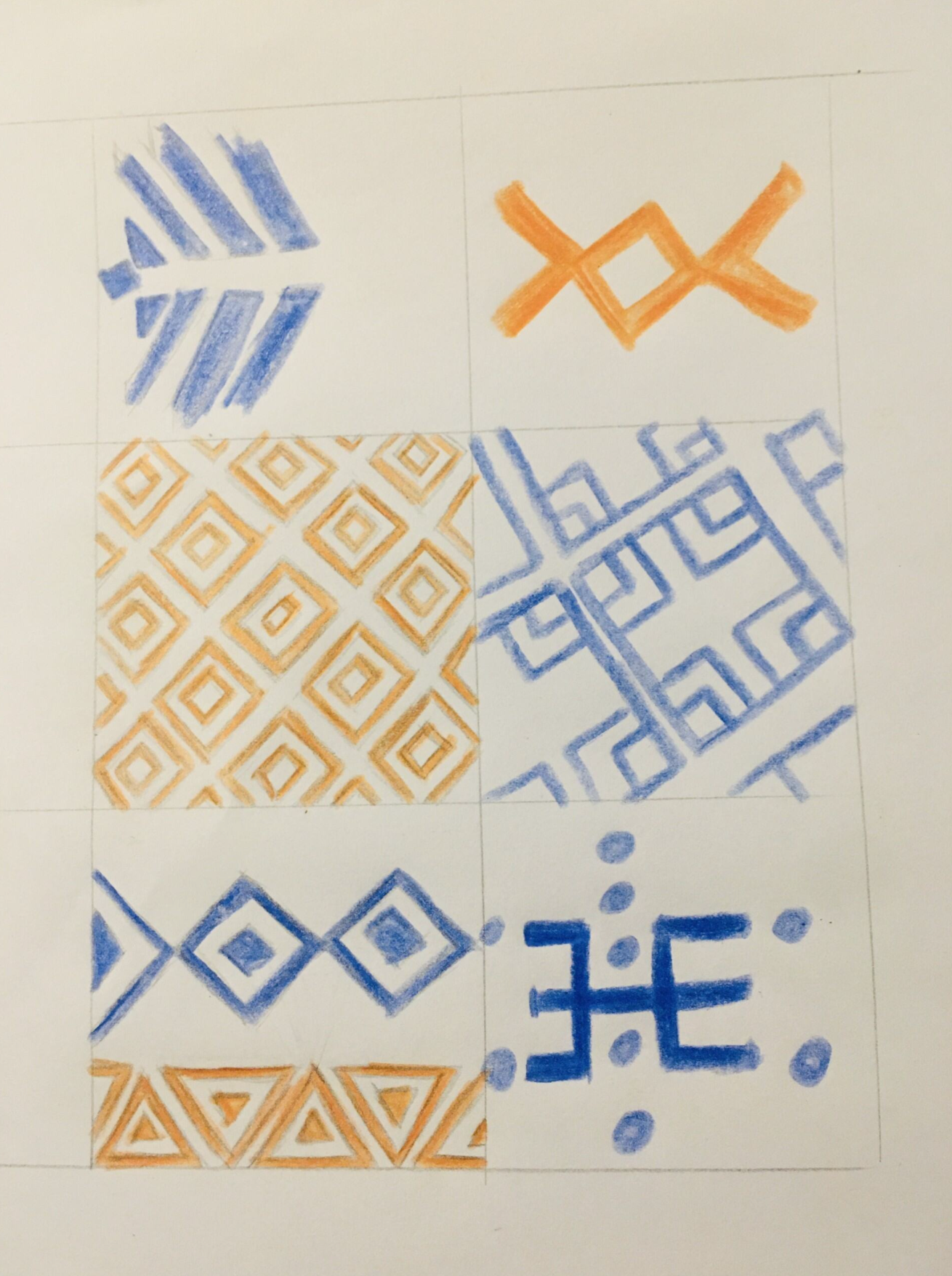
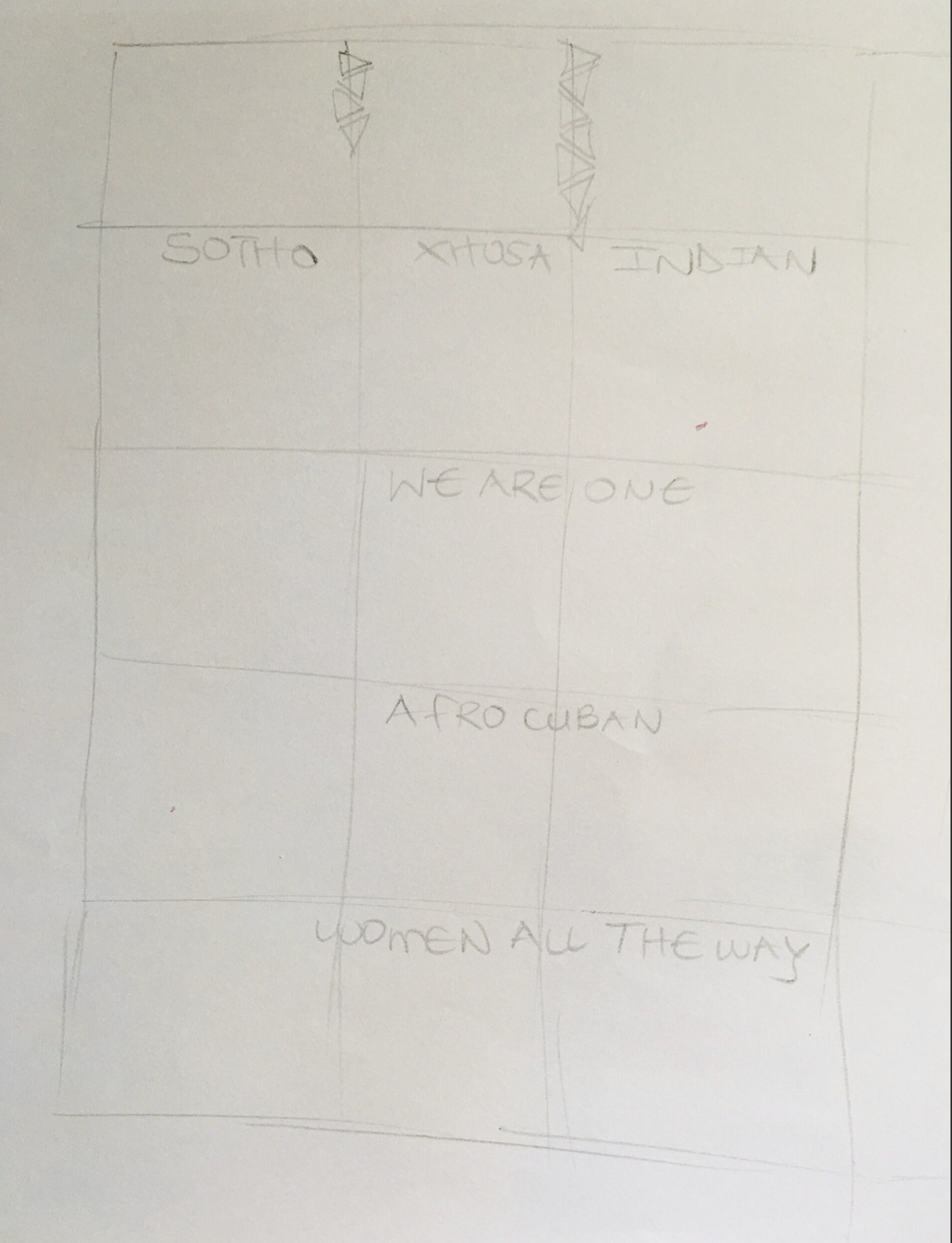
Image of the process, Sketches. Courtesy of the designer Awande Ngcobo. CUT, SA, 2026