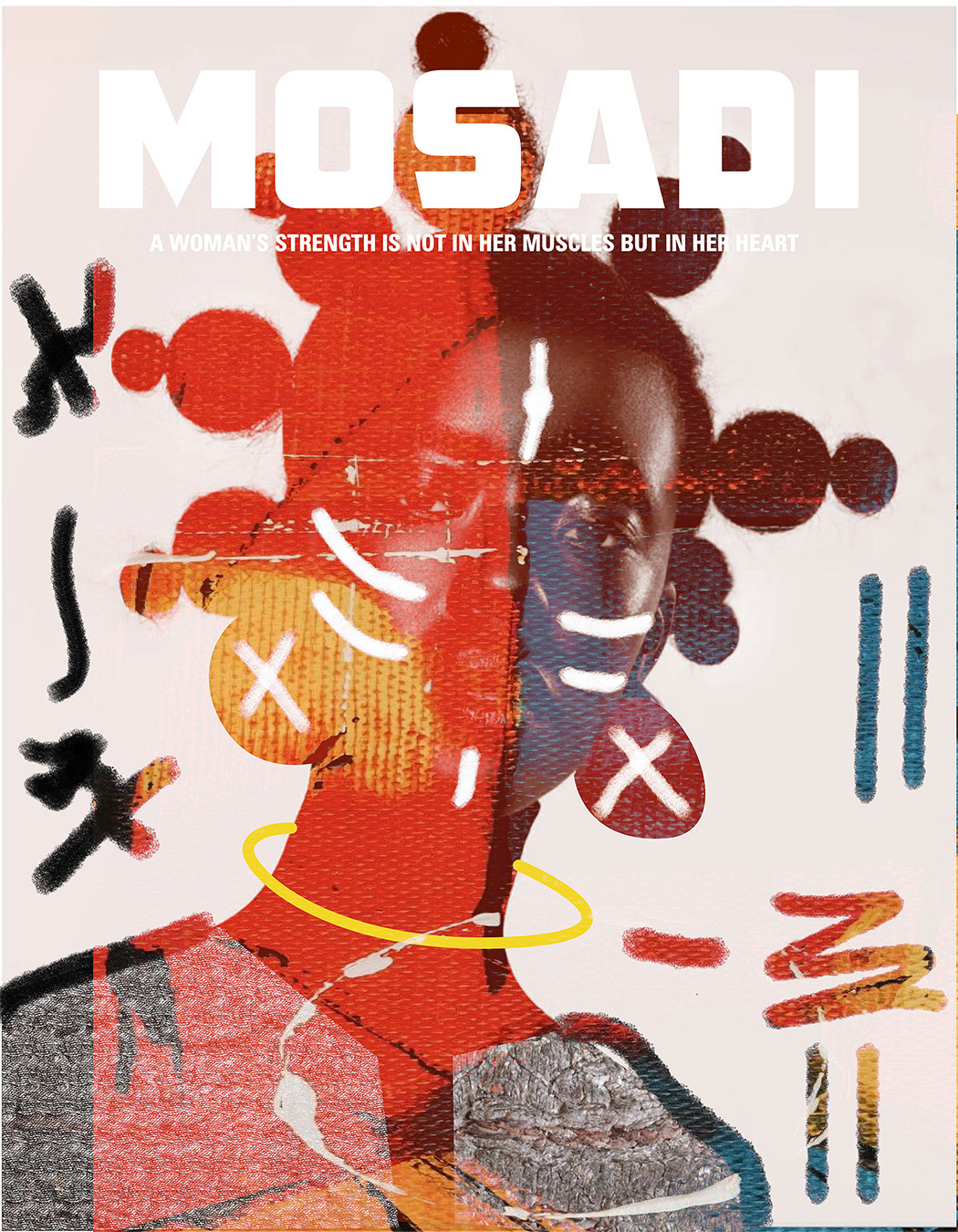
Mothibenyane Charles, Mosadi. 18 x 24 inches. Digital collage. Central University of Technology, Free State, South Africa, 2026
Project statement
This approach draws profound inspiration from South African icons like Dr. Esther Mahlangu, whose vibrant Ndebele house-painting traditions. I used fire red, blue, brown, yellow, and black colours and vivid hues elevated everyday women's artistry into global symbols of cultural resilience and visual power. Similarly, Winnie Mandela embodied unshakeable defiance against apartheid, rallying women as political forces who nurtured communities amid oppression. These trailblazers illustrate how South African women, strong irrespective of gender constraints, wield transformative influence; as mothers, they not only bear and raise the next generation but also instill values of endurance, leadership, and communal witness, proving their gaze shapes history itself.
This approach draws profound inspiration from South African icons like Dr. Esther Mahlangu, whose vibrant Ndebele house-painting traditions. I used fire red, blue, brown, yellow, and black colours and vivid hues elevated everyday women's artistry into global symbols of cultural resilience and visual power. Similarly, Winnie Mandela embodied unshakeable defiance against apartheid, rallying women as political forces who nurtured communities amid oppression. These trailblazers illustrate how South African women, strong irrespective of gender constraints, wield transformative influence; as mothers, they not only bear and raise the next generation but also instill values of endurance, leadership, and communal witness, proving their gaze shapes history itself.
The design process appears to draw from African visual traditions, especially the expressive use of pattern, symbolism, and colour. The repeated forms suggest continuity and vigilance, while the strong textures, vibrant palette creates visual energy and reinforces the idea of power and determination. The overall style feels deliberate and symbolic, making the artwork more than decoration; it becomes a visual expression of voice and resistance.
The influence of Dr. Esther Mahlangu can be seen in the celebration of African identity through pattern, geometry, and cultural pride. Her work has shown how traditional art can carry modern relevance while still honouring heritage, especially through the visibility of women’s creativity. In a similar way, this artwork reflects the strength of South African women as carriers of culture, memory, and artistic expression that is why I included the neck pandent and big earrings on my artwork. Winnie Mandela’s influence is expressed through resilience, courage, and the ability of women to stand firm in difficult times.
She remains a powerful symbol of womanhood, leadership, and sacrifice in South Africa, reminding us that women are not only nurturers but also fighters, protectors, and changemakers. This artwork connects with that legacy by presenting women as strong figures whose presence shapes both family and society.
South African women are often the foundation of communities, and their strength extends beyond gender roles into leadership, endurance, and care. As mothers, they play a vital role in raising children, preserving values, and building the future, but their identity is not limited to motherhood alone. The artwork honours this complexity by presenting womanhood as layered, powerful, and deeply influential. I infused different styles such as abstract and pop art to make my artwork more vibrant. I made the skin more darker to evoke the emotions and on my moodboraed most of the pictures are black and white and that's were I got my inspiration.
Self ReflectionThis project became more meaningful to me because it helped me see woman as a source of strength, identity, and resilience, not just as a subject in my design. It also taught me to trust my design process, because the ideas developed naturally as I explored symbolism, colour, and visual storytelling.
Through this work, I realised that design is not only about creating something visually appealing, but also about communicating values and lived experiences. The influence of women like Dr. Esther Mahlangu and Winnie Mandela reminded me that South African women carry culture, leadership, courage, and care in powerful ways. Their impact helped me understand that womanhood is not defined by limitation, but by influence, endurance, and purpose.
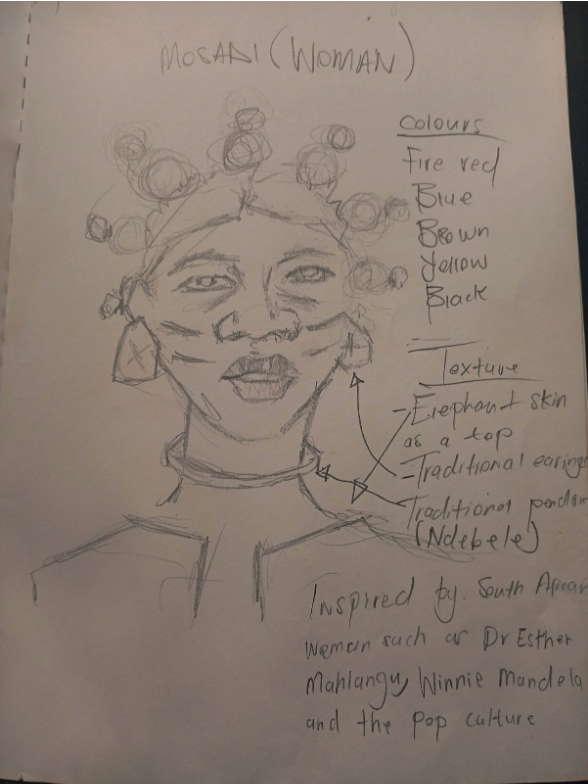
Image of the process, Sketch. Courtesy of the designer Mothibenyane Charles. CUT, SA, 2026