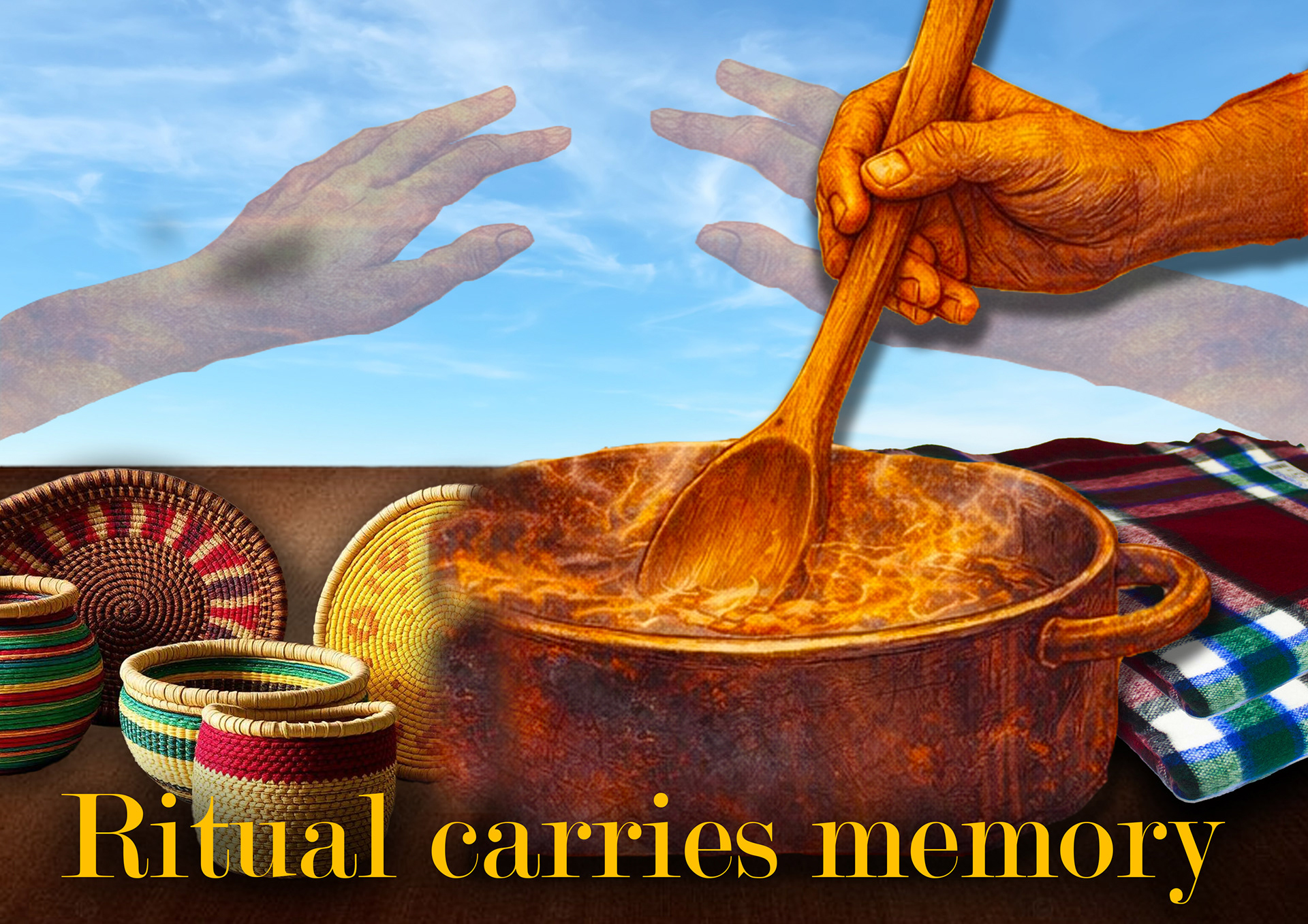
Kabelo Moses, Hands that remember. Digital media. Central University of Technology, Free State, South Africa
2026
2026
Project Statement
This project is a series of layered poster compositions that explore ritual, texture, and memory within Black South African homes. The work focuses on everyday domestic practices such as cooking, preparing spaces, and gathering, which serve as quiet but powerful ways of passing down culture across generations. Rather than depicting large ceremonies, the project highlights small, repeated actions that hold deep cultural meaning.
Hands are used as the central visual metaphor to represent the transmission of memory and tradition. Through gestures such as stirring, holding, and arranging, hands become carriers of knowledge, connecting past and present generations. These actions reflect the role of women in maintaining cultural practices within the home, emphasizing care, labour, and continuity.
The posters incorporate layered textures inspired by materials commonly found in these environments, including woven baskets, fabric, wooden utensils, and food surfaces. These textures act as visual representations of memory, showing how experiences accumulate over time. By layering these elements, the compositions mimic the way cultural knowledge is built through repetition and shared experience.
The project is also informed by my own personal memories of family gatherings, where preparation, storytelling, and shared responsibilities created a strong sense of identity and belonging. Through this work, I aim to show that everyday rituals are not ordinary, but are essential in preserving culture and shaping who we are.
Self reflection
This project was a meaningful experience for me because it allowed me to explore my own cultural background in a deeper and more intentional way. By focusing on everyday rituals within Black South African homes, I began to realise how important small, repeated actions are in shaping identity and preserving culture. Things that once felt ordinary, like cooking, preparing spaces, and family gatherings, became significant sources of inspiration and meaning in my work.
Through this process, I also developed a stronger understanding of how visual elements such as texture, layering, and composition can communicate ideas beyond words. Experimenting with materials and textures helped me translate memory into a visual form, and I learned how to use design to express emotion, history, and cultural narratives. The use of hands as a central symbol strengthened my concept and allowed me to clearly represent the idea of cultural transmission across generations.
Working on this project also challenged me to think more critically about my creative decisions and how they connect to my concept. I became more aware of the importance of intention in design, ensuring that every element included in my work contributed to the overall message.
Overall, this project helped me grow both creatively and personally. It allowed me to appreciate the value of my cultural experiences and showed me how design can be used as a powerful tool to tell meaningful and authentic stories.
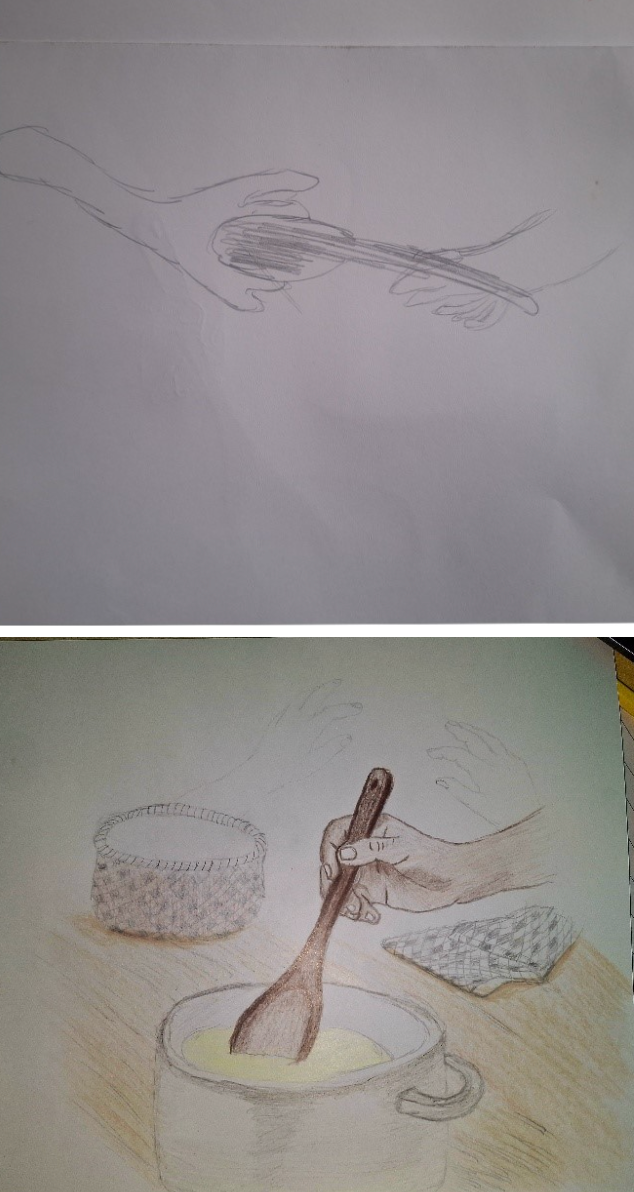
Image of the process, Sketches. Courtesy of the designer Kabelo Moses. CUT, SA, 2026