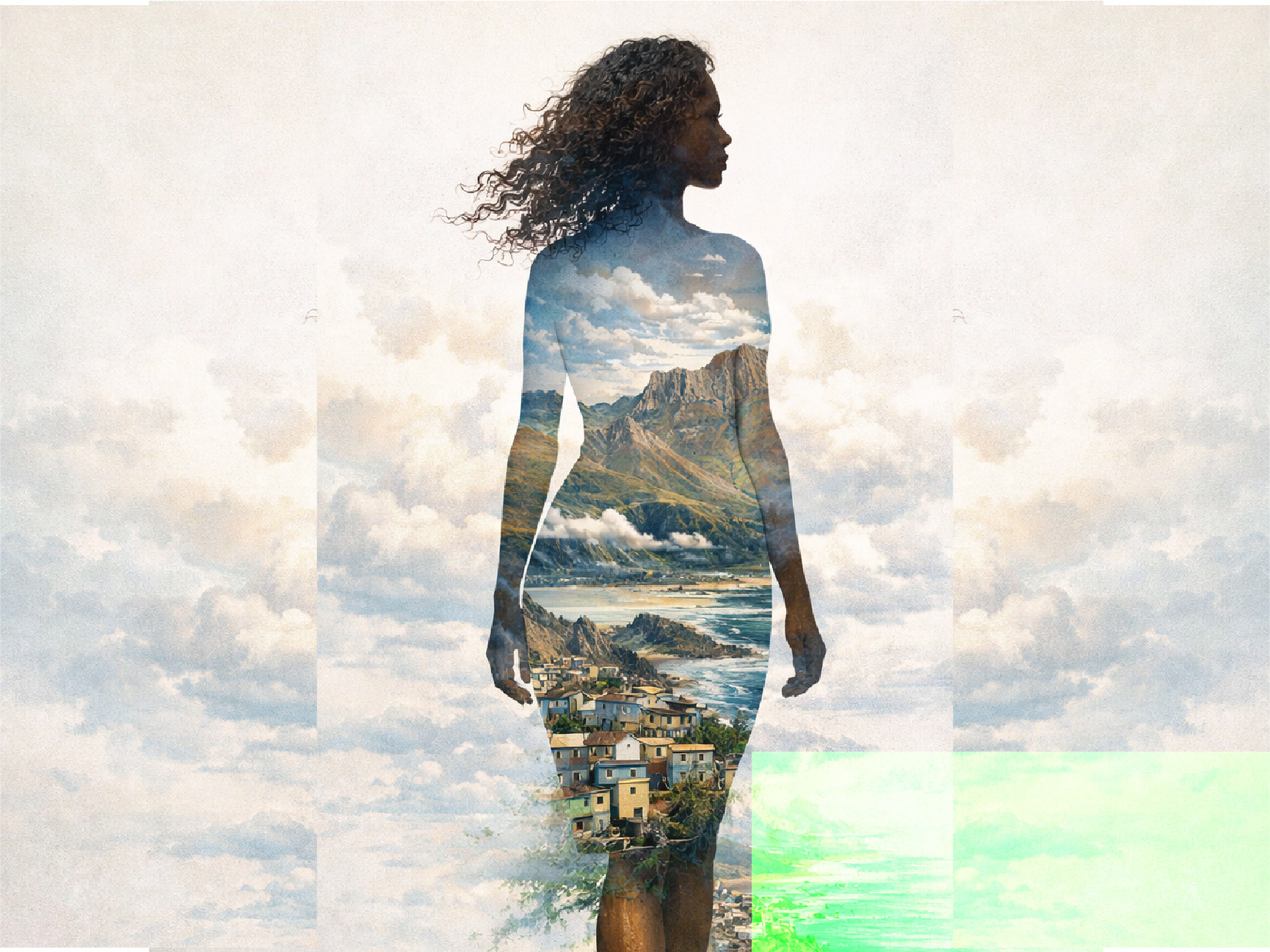
Jay-Den Van Wyk, The body of the Malay. Mixed media. Central University of Technology, Free State, South Africa, 2026
Project Statement
My project explores the theme "Bodies of Color, Geographies of Form" through the lens of South African colored identity, focusing on how cultural hybridity and environment shape the visual language of the female body. Growing up surrounded by coloured, Afrikaans, and African cultural influences has made me aware of how identity is formed through a mix of traditions, communities, and spaces. In my poster, I represent the female body as a living map, where hair and form merge with landscape elements such as mountains, ocean, and urban environments. The use of a double-exposure style allows the body to contain layers of meaning, symbolizing how geography, culture, and lived experience are embedded within identity. By focusing on hair as a central visual element, I highlight its significance as a marker of heritage, expression, and individuality. Through this work, I aim to show how the female body becomes a powerful visual representation of place, culture, and hybrid identity within a South African context.
My project explores the theme "Bodies of Color, Geographies of Form" through the lens of South African colored identity, focusing on how cultural hybridity and environment shape the visual language of the female body. Growing up surrounded by coloured, Afrikaans, and African cultural influences has made me aware of how identity is formed through a mix of traditions, communities, and spaces. In my poster, I represent the female body as a living map, where hair and form merge with landscape elements such as mountains, ocean, and urban environments. The use of a double-exposure style allows the body to contain layers of meaning, symbolizing how geography, culture, and lived experience are embedded within identity. By focusing on hair as a central visual element, I highlight its significance as a marker of heritage, expression, and individuality. Through this work, I aim to show how the female body becomes a powerful visual representation of place, culture, and hybrid identity within a South African context.
Self reflection
Working within a diverse group has expanded my understanding of how culture and geography influence the representation of the female body across different contexts. My peers explored a range of perspectives, from the use of textiles and patterns to represent cultural identity, to the connection between landscape and the body through symbolism and mythology, as well as the role of art in challenging stereotypes and reclaiming identity. These contributions highlighted how visual language can differ across regions such as Latin America, India, and Africa, while still sharing common themes of identity and belonging. Their ideas encouraged me to think more deeply about my own cultural background and how I could translate those influences into a visual form, ultimately strengthening the conceptual depth of my work.
Working within a diverse group has expanded my understanding of how culture and geography influence the representation of the female body across different contexts. My peers explored a range of perspectives, from the use of textiles and patterns to represent cultural identity, to the connection between landscape and the body through symbolism and mythology, as well as the role of art in challenging stereotypes and reclaiming identity. These contributions highlighted how visual language can differ across regions such as Latin America, India, and Africa, while still sharing common themes of identity and belonging. Their ideas encouraged me to think more deeply about my own cultural background and how I could translate those influences into a visual form, ultimately strengthening the conceptual depth of my work.
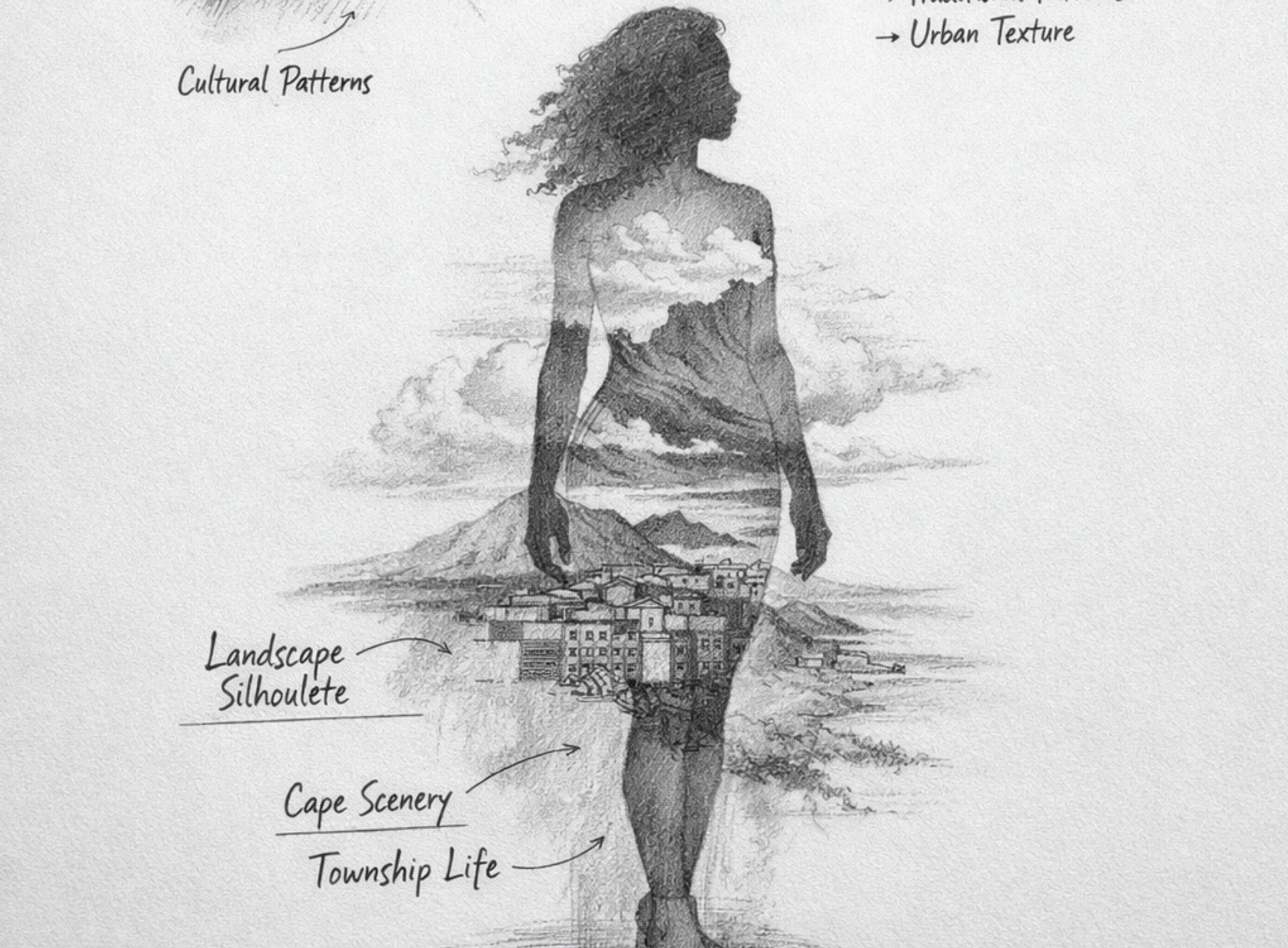
Image of the process, Sketch. Courtesy of the designer Jay-Den Van Wyk. CUT, 2026