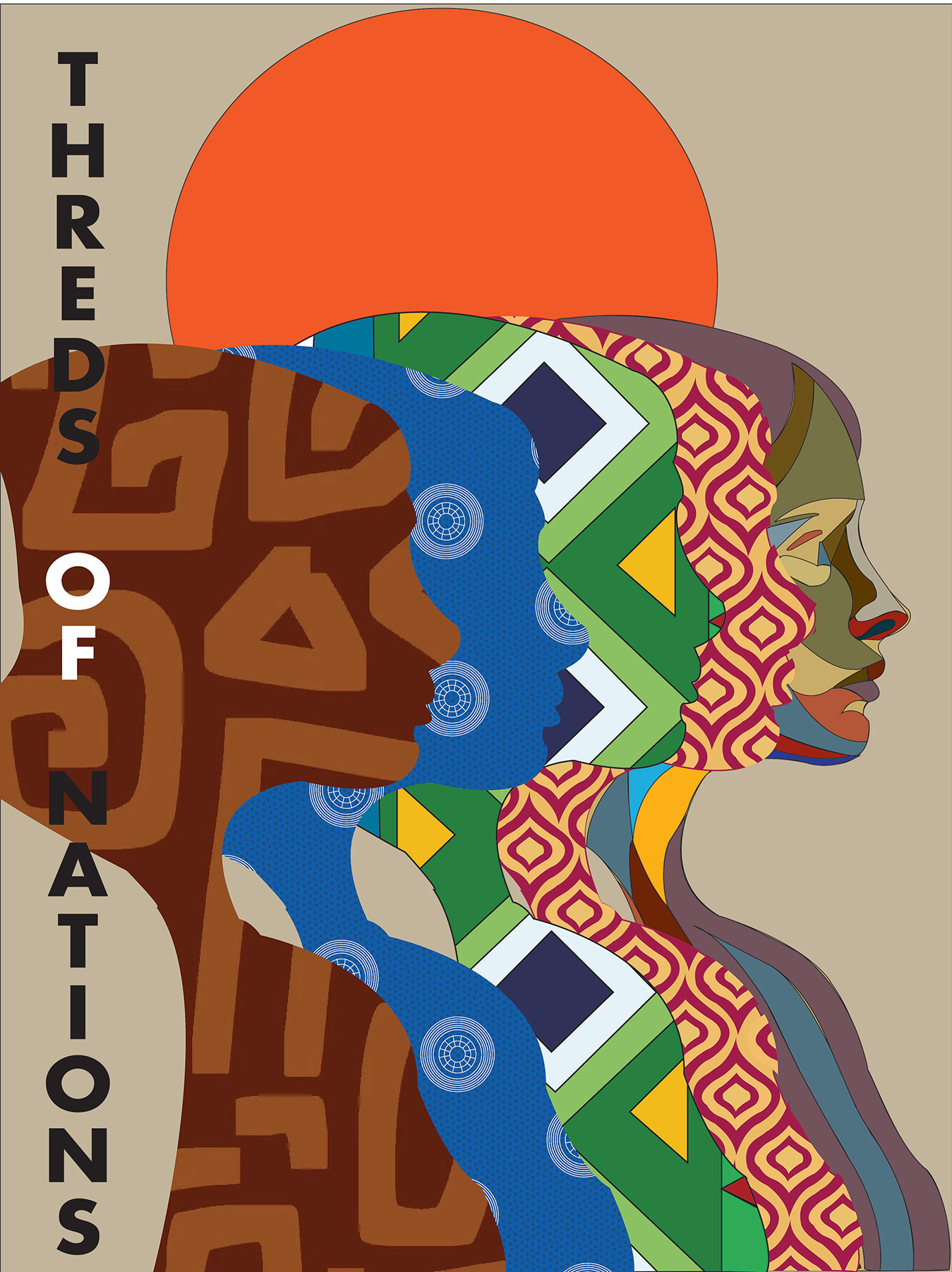
Orefile Phajane, Threads of Nations. 18 x 24 inches. Mixed media. Central University of Technology, South Africa, 2026
Project Statement
Our quilt is more than fabric stitched together, it is a tapestry of stories, resilience, and cultural pride. As a group, we wanted to honor the women who shaped history and continue to inspire across generations. To do this, we chose to represent four cultures that speak to our collective heritage and shared values: Xhosa, Sotho, Afro-Cuban, and Indian.
Each panel of the quilt will embody the spirit of these women, their struggles, and contribution through colors, patterns, and symbols unique to their traditions. The Xhosa and Sotho sections will celebrate the strength and wisdom of African women whose voices carried communities forward. The Afro-Cuban piece will highlight the rhythm, creativity, and resilience born from a fusion of African and Caribbean roots. The Indian section will honor the grace, intellect, and courage of women who have shaped one of the world’s oldest civilizations.
Together, these cultures form a vibrant mosaic, reminding us that women everywhere are threads of continuity, binding past to present, tradition to innovation, and individuality to community. Our quilt is not just an artwork; it is a living tribute to women’s power, diversity, and unity across the world.
Self-Reflection on Collaborative Learning
Working Across Time Zones Working with people who live 12 hours apart was not easy. When some of us were awake, others were asleep, and it made planning meetings and sharing ideas tricky. At first, it felt like we were always missing each other.
To make it work, we found ways to communicate even when we couldn’t talk at the same time. We used shared notes, messages, and updates so that everyone could see what had been done and add their own thoughts later. This way, no one was left out, and our ideas kept moving forward.
We also learned to build on each other’s skills. One person would start an idea, and the next would add to it, making it stronger, and the project kept growing around the clock.
In the end, the time difference didn’t stop us. Instead, it showed us how teamwork can cross borders and time zones. By listening, sharing, and combining our talents, we were able to finish the project together.
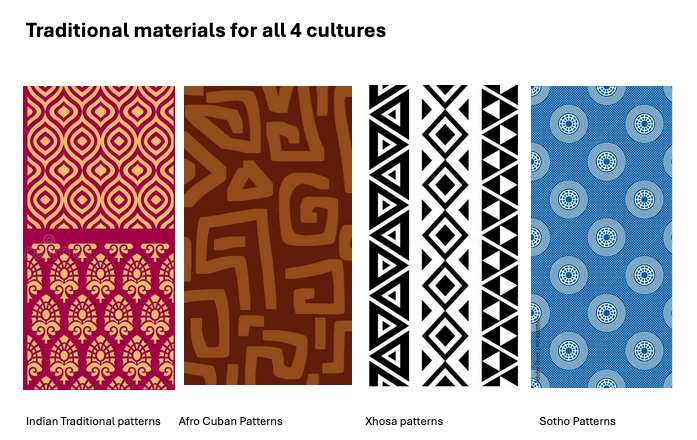
Images of patterns used courtesy of the designer Orefile Phajane, Free State,
South Africa, 2026
South Africa, 2026